
Application of Float Glass in Construction and Building
Introduction
Float glass, a cornerstone of modern architecture, has revolutionized the way we design and construct buildings. Produced through the innovative float process—where molten glass is floated on a bed of molten tin to create a perfectly flat and uniform sheet—float glass offers unparalleled clarity, strength, and versatility. At BD Float Glass, we specialize in high-quality float glass products tailored for the construction industry in Bangladesh and beyond.
In an era where sustainable building practices are paramount, float glass stands out for its ability to maximize natural light, reduce energy consumption, and enhance indoor-outdoor connectivity. From towering skyscrapers to cozy residential homes, float glass is integral to creating spaces that blend functionality with beauty. Let’s delve deeper into its properties and applications.
This article explores the diverse applications of float glass in building construction, highlighting its benefits, types, and real-world uses. Whether you’re an architect, builder, or developer, understanding these applications can help you create structures that are not only aesthetically pleasing but also energy-efficient and durable.
What is Float Glass?
Float glass is manufactured using the Pilkington process, invented in the 1950s, which involves pouring molten glass onto a bath of molten tin in a controlled atmosphere. This method ensures the glass cools evenly, resulting in a distortion-free surface with parallel sides.
Unlike older sheet glass methods, float glass eliminates the need for grinding and polishing, making it cost-effective and scalable for large-scale production.
Key variants include clear float glass for maximum transparency, tinted float glass for solar control, and reflective float glass for privacy and heat reflection. These can be further processed into tempered, laminated, or insulated units to meet specific construction needs.
In Bangladesh’s tropical climate, where heat management is crucial, tinted and low-emissivity (Low-E) coated float glass are particularly popular.
Key Properties of Float Glass
Float glass boasts several properties that make it ideal for construction:
- Optical Clarity and Transparency: With minimal distortion, it allows up to 90% light transmission, enhancing natural illumination and reducing the need for artificial lighting.
- Strength and Durability: While basic float glass is strong, processing like tempering increases its resistance to impacts and thermal stress.
- Thermal Insulation: When coated or used in double-glazed units, it helps regulate indoor temperatures, cutting energy costs by up to 30% in heating and cooling.
- Chemical Resistance: It withstands exposure to weather, chemicals, and UV rays without degrading.
- Aesthetic Versatility: Available in various thicknesses (2mm to 19mm), colors, and finishes, it suits both modern and traditional designs.
These properties ensure float glass meets international standards like ASTM and ISO, making it a reliable choice for sustainable building projects.
This is the heading
Lorem ipsum dolor sit amet, consectetur adipiscing elit. Ut elit tellus, luctus nec ullamcorper mattis, pulvinar dapibus leo.
This is the heading
Lorem ipsum dolor sit amet, consectetur adipiscing elit. Ut elit tellus, luctus nec ullamcorper mattis, pulvinar dapibus leo.
This is the heading
Lorem ipsum dolor sit amet, consectetur adipiscing elit. Ut elit tellus, luctus nec ullamcorper mattis, pulvinar dapibus leo.
Applications in Building Facades
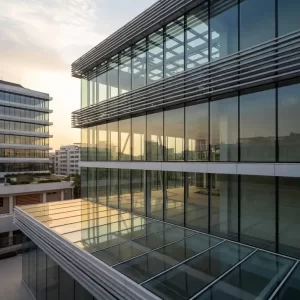
One of the most prominent uses of float glass is in building facades, where it creates sleek, modern exteriors. Curtain walls, spider systems, and unitized facades often employ reflective or tinted float glass to provide a seamless glass envelope. This not only enhances the building’s aesthetic appeal—think of the glistening corporate towers in Dhaka—but also offers solar control, reducing heat gain by reflecting sunlight.
high-rise constructions, laminated float glass adds safety, preventing shards from falling in case of breakage. For example, in tropical regions like Bangladesh, solar control glass can lower indoor temperatures, improving occupant comfort and energy efficiency.